



In 2026, programmatic advertising is the foundation of digital media buying. It powers most global digital ad spends and connects brands to audiences across every screen. What once felt complex is now central to performance marketing and brand growth.
As Neil Kettleborough explains, programmatic is no longer just automation. It is intelligent, data-led decision-making at scale. When managed correctly, it becomes the control system for modern marketing performance.
Defining Programmatic Advertising in Today’s Digital Ecosystem
Programmatic advertising is the automated buying and selling of digital ad inventory using data, AI, and real-time bidding. Instead of manual negotiations, platforms decide which ad appears, to whom, and at what price within milliseconds. This system enables advertisers to reach the right audience across websites, apps, connected TV, retail media, and digital audio. In 2026, it is the backbone of measurable digital growth.
How Does It Work?
A user opens a website or app and triggers an ad request.
An instant auction takes place across exchanges.
Advertisers bid through a DSP based on data signals.
The highest relevant bid wins and the ad is served.
This entire process happens in under a second, powered by AI-driven decision systems.
Why Has Programmatic Become Essential in 2026?
Digital consumers move across multiple devices daily. Brands must follow them with consistent, relevant messaging. Programmatic enables this by unifying data, automation, and cross-channel execution. It also supports advanced omnichannel marketing strategies that connect display, mobile, CTV, and retail media into one measurable framework.
Key Benefits
Efficiency – Automated bidding reduces manual work and improves speed.
Precision targeting – Ads are served based on behaviour, intent, and context.
Scalability – Campaigns can expand globally without operational strain.
Real-time optimisation – Performance data adjusts bids and budgets instantly.
Transparency – Advanced dashboards provide clear performance insights.
As Neil Kettleborough notes, success comes from combining automation with human strategy. Technology drives speed, but experts drive direction.

Core Components of the Programmatic Ecosystem
Programmatic works through a connected digital marketplace. Each component plays a defined role in buying and selling media efficiently. Understanding this structure helps marketers make better platform decisions. In 2026, these systems are deeply integrated and powered by AI-led infrastructure.
Main Building Blocks
DSPs (Demand-Side Platforms) – Tools advertisers use to buy ad space across exchanges.
SSPs (Supply-Side Platforms) – Platforms publishers use to sell their inventory.
Ad Exchanges – Marketplaces where automated auctions take place.
CDPs – Systems that unify first-party customer data for targeting.
Ad Networks – Curated bundles of publisher inventory resold to advertisers.
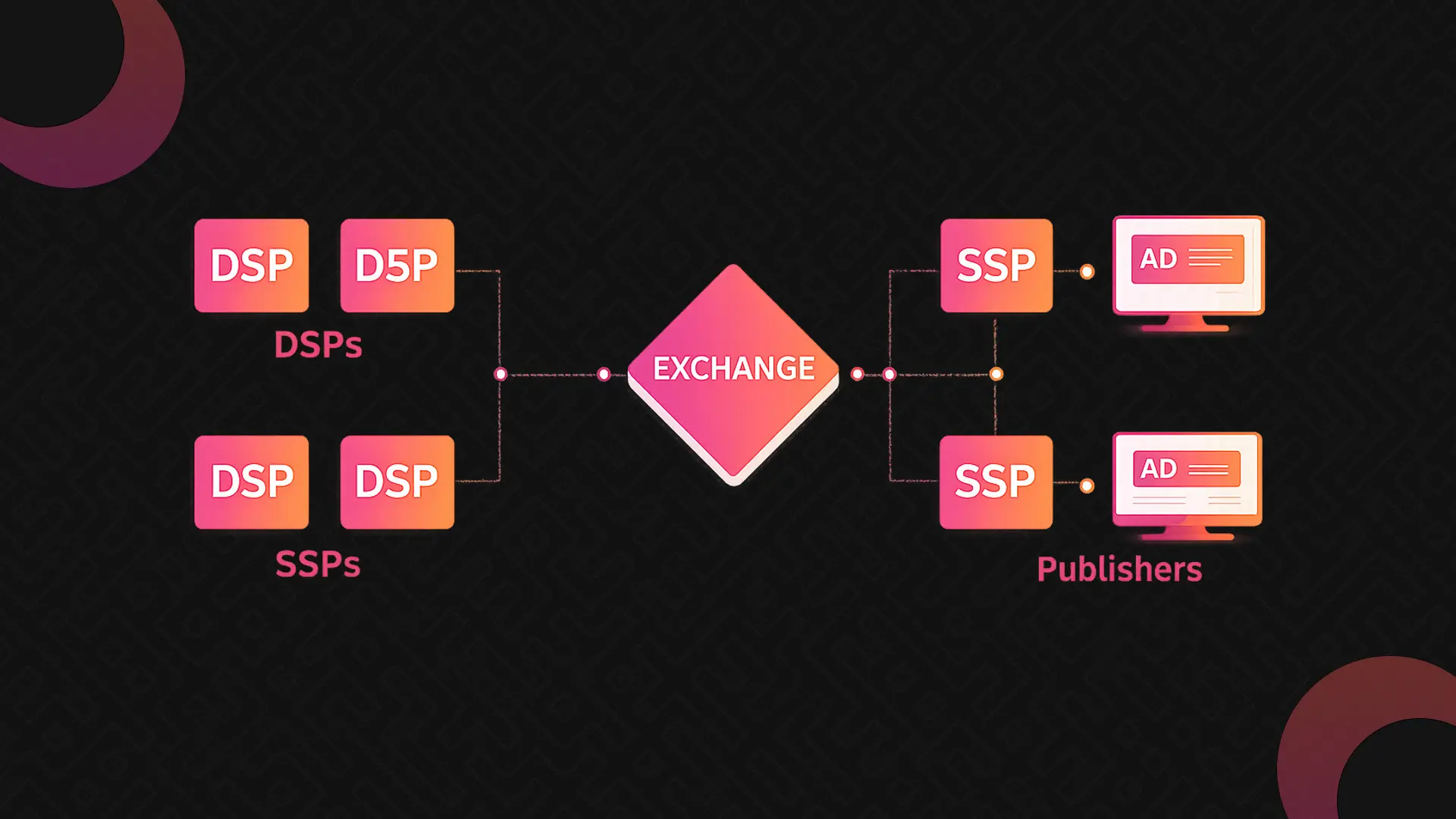
DSPs vs Ad Networks: What’s the Difference?
Many marketers confuse DSPs and ad networks. While both enable ad buying, their level of control, transparency, and scale differs significantly. Choosing the right one depends on budget, goals, and internal expertise.
In 2026, the distinction still matters for performance-driven brands. Demand-Side Platforms (DSPs)
Leading DSPs include:
Display & Video 360 – Google’s enterprise DSP offering deep integration with analytics, YouTube, and cross-channel inventory.
The Trade Desk – An independent DSP known for advanced identity solutions and strong omnichannel reach.
Amazon DSP – A commerce-focused DSP leveraging Amazon’s first-party shopper data for performance-driven campaigns.
Strengths:
Full visibility into placements and auction costs – Advertisers can see where ads appear and how budget is allocated across exchanges.
Advanced targeting using behavioural and contextual data – Enables precise audience reach based on intent, browsing patterns, and content signals.
Omnichannel campaign management in one interface – Manage display, video, CTV, audio, and retail media from a single dashboard.
Real-time optimisation powered by AI-Driven Advertising – Machine learning continuously refines bids, audiences, and creative delivery for improved performance.
DSPs are best suited for enterprises and performance-focused teams.
Ad Networks Examples include:
Google AdSense – A large-scale ad network that gives advertisers easy access to publisher inventory with minimal technical setup.
Taboola – A native advertising platform that places sponsored content across premium publisher websites to drive engagement.
Outbrain – A content discovery network focused on native ad placements within editorial environments.
Strengths:
Simpler setup for smaller advertisers – Requires less technical expertise and allows quicker campaign launches.
Pre-packaged inventory by content category – Groups placements by themes such as finance or lifestyle for easier targeting.
Easier entry into digital advertising – Offers a straightforward starting point before moving to advanced DSP platforms.
However, transparency and optimisation control are limited compared to DSPs.
What Are the Key Programmatic Advertising Trends in 2026?
The landscape continues to evolve rapidly. Brands that monitor programmatic advertising trends gain a competitive edge in cost efficiency and targeting precision. Innovation is focused on privacy, automation, and cross-screen integration.
The industry is shifting from campaign management to autonomous orchestration.
Major Trends
Growth of retail media networks and first-party data ecosystems.
Connected TV becoming central to brand budgets.
Contextual AI replacing third-party cookie targeting.
Multi-agent systems automating bidding and creative rotation.
Clean room technology supporting privacy-compliant measurement.

How Programmatic Advertising Works Step by Step
Although complex behind the scenes, the process follows a clear structure. Each step ensures that ads reach relevant users efficiently. In 2026, AI enhances every stage of this workflow.
The goal is simple: deliver measurable business outcomes.
Campaign Execution Flow
Define goals such as ROAS, CPA, or brand lift.
Build audience segments using first-party and contextual data.
Launch bidding strategies within a DSP.
Serve creatives across selected channels.
Optimise continuously using live performance data.
Pros and Cons of Programmatic Advertising
Programmatic offers strong advantages, but it requires expertise. Without strategic oversight, automation can waste budget. Understanding both sides ensures balanced decision-making.
Experienced leadership is critical for long-term efficiency.
Pros
Advanced cross-channel reach across global markets.
Data-driven bidding improves cost efficiency.
Real-time reporting enables fast optimisation.
Integration with analytics and CRM systems.
Cons
Platform complexity requires trained specialists.
Hidden technology fees can reduce margins.
Ad fraud remains a persistent risk.
Over-reliance on algorithms can misalign strategy.
Common Mistakes to Avoid
Even sophisticated brands make preventable errors. These mistakes reduce ROI and weaken performance visibility. Proactive governance prevents budget leakage.
Strategic oversight remains essential in 2026.
Buying low-quality inventory to reduce CPMs.
Ignoring fraud detection and verification partners.
Launching campaigns without clear KPIs.
Failing to prepare for a cookieless ecosystem.
Relying entirely on automation without human review.
Tools That Deliver Measurable Results
Choosing the right technology stack directly impacts campaign outcomes. Leading DSPs integrate AI, analytics, and cross-channel reporting into unified systems. A global digital advertising strategist evaluates technology based on transparency, scale, and compliance.
Enterprise DSP Platforms
Display & Video 360 provides deep integration with Google analytics and YouTube ecosystems.
The Trade Desk offers strong identity solutions and independent reach.
Amazon DSP leverages retail intent data for commerce-driven growth.
Verification & Fraud Protection
Integral Ad Science monitors viewability and brand safety.
DoubleVerify protects against invalid traffic and domain spoofing.
Metrics Brands Track
Cost per acquisition (CPA) and return on ad spend (ROAS).
Viewability rates and attention metrics.
Incremental revenue and conversion lift.
Fraud rate reduction and brand safety compliance.

What Does the Future Hold Beyond 2026?
Programmatic is moving towards full automation with strategic supervision. AI systems increasingly manage budget pacing, creative testing, and predictive modelling. According to Neil Kettleborough, the future lies in intelligent orchestration rather than isolated campaign execution.
The direction includes:
Self-optimising media ecosystems – AI systems automatically adjust bidding, budgeting, and creative delivery based on live performance data.
Privacy-resilient identity frameworks – First-party data and consent-based identity solutions replace third-party cookies for compliant targeting.
Deeper integration between CDPs and DSPs – Customer data platforms connect directly with buying platforms to activate unified audience insights.
Continuous real-time experimentation without manual delays – Autonomous systems test and refine creatives, audiences, and bids without waiting for human intervention.
Conclusion
Programmatic advertising in 2026 represents intelligence at scale. It blends automation, data science, and strategic leadership into a unified growth engine. DSPs and ad networks both have roles, but transparency and expertise determine success. As emphasised by Neil Kettleborough, brands that align AI with human insight outperform competitors consistently. Programmatic is not simply a buying method; it is the strategic infrastructure of modern marketing.