


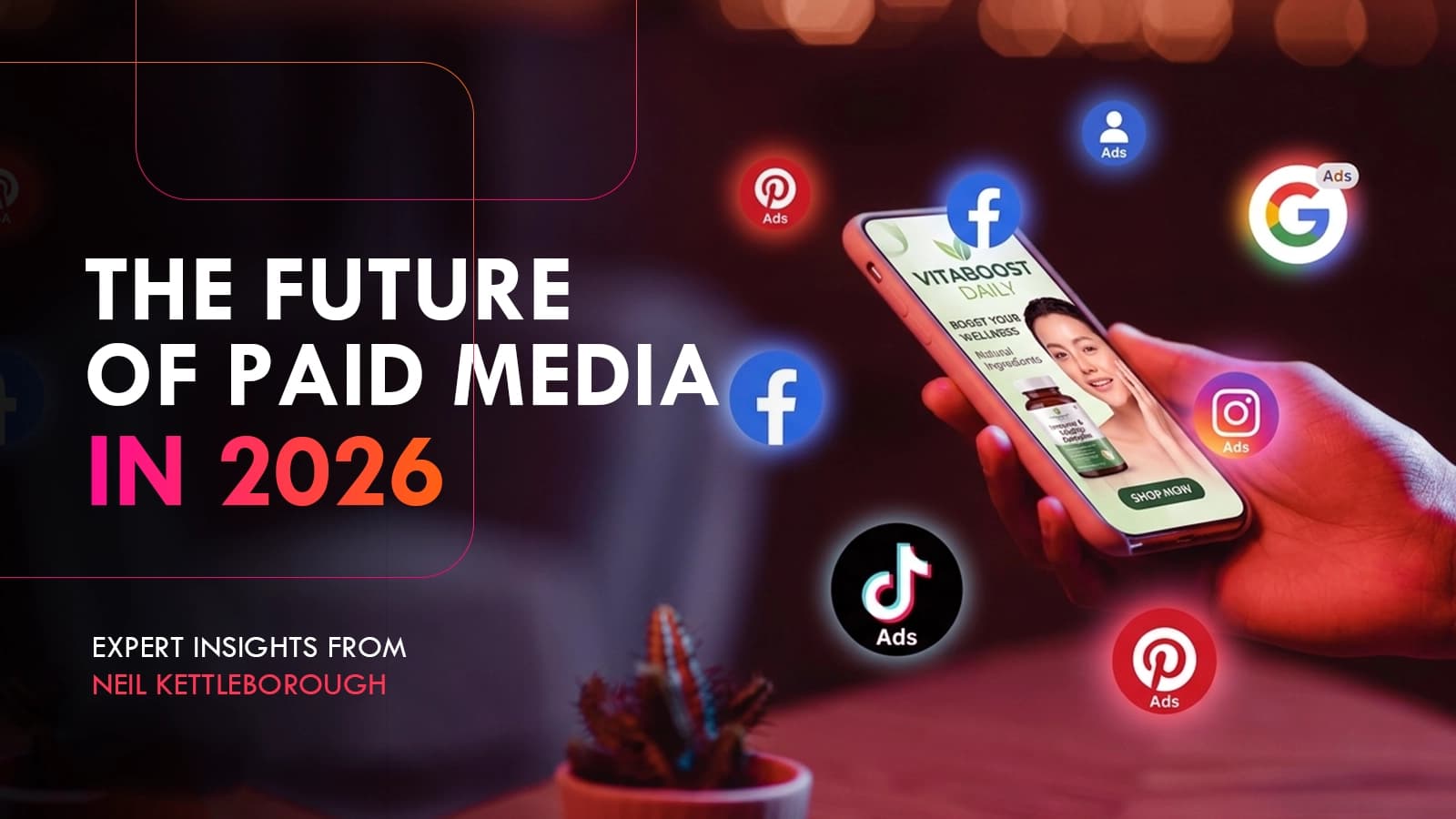
With over 98% of consumers now shopping online, paid media has become a critical driver of digital growth. In 2026, the landscape is more competitive, automated, and shaped by rapid advancements in AI in advertising.
Paid media is no longer just a tactical channel. It is a strategic investment that drives visibility, customer acquisition, and long-term e-commerce success.
As Neil Kettleborough, Global CEO & Co-Founder at AppIQ, explains, this shift is one of the most significant changes in modern digital marketing.
“Paid media is evolving faster than ever. Brands that balance data, automation, and creativity will lead in 2026.”

What is Paid Media in 2026?
Paid media refers to digital advertising where brands invest in promoting products across platforms like search engines, social media, apps, and display networks. It is the foundation of modern performance marketing, where every campaign is measured and optimised for results. In 2026, paid media is powered by automation and data. This allows brands to reach the right audience at the right time with greater accuracy and efficiency.
How Does Paid Media Work Today?
Modern paid media operates through intelligent systems that analyse data and optimise campaigns in real time. Platforms use machine learning to continuously improve targeting and performance. This shift has reduced manual effort and increased efficiency, making campaigns more scalable and predictable.
Key process:
Data collection and analysis Platforms collect behavioural data such as search activity, browsing patterns, and purchase intent. This data helps identify user interests and predict future actions.
AI-driven targeting Advanced systems process this data to find high-value audiences. This ensures ads are shown to users who are most likely to engage and convert.
Real-time ad delivery Ads are served instantly based on user behaviour and context. This increases relevance and improves overall campaign performance.
Continuous optimisation Campaigns are constantly refined using performance insights. Over time, this leads to stronger results and improved return on investment.
Why Is Paid Media Important for E-Commerce Growth?
Paid media plays a vital role in driving online sales and scaling businesses. It helps brands stay visible in a highly competitive digital environment. A well-defined paid media strategy ensures consistent traffic, conversions, and long-term growth.
Key benefits:
High-intent audience targeting Paid media reaches users who are already interested in similar products or services. This increases conversion rates and reduces wasted ad spend.
Scalable growth opportunities Campaigns can be expanded quickly once they perform well. This allows businesses to grow without delays or limitations.
Measurable performance Every action can be tracked and analysed in detail. This helps brands make data-driven decisions and improve results.
Omnichannel presence Paid media connects multiple platforms into one strategy. This ensures consistent messaging across all customer touchpoints.

Google Ads: The Core of High-Intent Advertising
Google Ads remains the most powerful platform for capturing users with strong purchase intent. It connects brands with customers exactly when they are searching for solutions. This makes it a key driver of conversions and revenue for e-commerce businesses.
Key performance benchmarks:
Strong click-through rates Google Ads achieves an average CTR of 3.17%, showing high engagement levels. This indicates strong alignment between search queries and ad relevance.
Reliable conversion rates With a 4.4% conversion rate, it consistently turns traffic into customers. This makes it a dependable channel for growth.
High return on investment Brands often see £2 returned for every £1 spent. This highlights its effectiveness in delivering measurable value.
How is AI Changing Google Ads in 2026?
Artificial intelligence is transforming how campaigns are created and managed. It reduces manual work while improving accuracy and efficiency. This evolution is part of a broader shift towards AI-driven marketing, where decisions are based on real-time data and automation.
Smart bidding systems AI adjusts bids based on user behaviour and likelihood to convert. This ensures budgets are spent more effectively.
Automated creative generation Ad copy and visuals are generated dynamically. This allows brands to test multiple variations quickly.
Improved audience targeting AI understands intent more deeply, enabling broader reach without losing relevance.
Best Practices for Google Ads To maximise performance, brands need a balanced and structured approach. Small improvements can lead to significant results.
Use a mix of keyword types Combining broad, phrase, and exact match captures different user intents. This improves both reach and precision.
Leverage first-party data Using your own customer data strengthens targeting. It also helps build more accurate audience segments.
Optimise for mobile users Fast and responsive landing pages improve user experience. This directly impacts conversion rates.

Facebook Ads: Driving Discovery and Social Commerce
Facebook Ads play a key role in helping users discover new products. Unlike search platforms, it focuses on interest-based targeting and engagement. This makes it highly effective for building awareness and influencing buying decisions.
What Makes Facebook Ads Effective Today?
Facebook combines strong audience data with engaging creative formats. Users interact with content naturally, which improves engagement and conversions. This creates a smooth journey from discovery to purchase, especially on mobile devices.
Best Practices for Facebook Ads
Success on Facebook depends on creative quality and continuous testing. Brands must adapt quickly to changing trends.
Focus on video content Short-form videos capture attention quickly and drive engagement. They are currently the most effective format.
Test multiple creatives Using different styles such as UGC and product demos helps identify what works best. This improves campaign performance over time.
Build retargeting funnels Retargeting helps convert users who have already shown interest. It increases the likelihood of completing a purchase.

Microsoft Ads: The Underrated Growth Channel
Microsoft Ads offers a valuable opportunity for brands looking to diversify. It provides access to a unique audience with strong purchasing power.
It is particularly effective for B2B and professional targeting.
Best Practices for Microsoft Ads
To succeed on Microsoft Ads, brands should tailor campaigns specifically for the platform. This helps unlock its full potential.
Use LinkedIn targeting This allows brands to reach professionals based on job roles. It is highly effective for B2B campaigns.
Optimise for desktop traffic Microsoft users are more active on desktops. Adjusting bids improves performance.
Focus on long-tail keywords These keywords are less competitive and more targeted. They often deliver better results at a lower cost.

Programmatic Advertising: Scalable and Data-Driven
Programmatic advertising automates the process of buying and placing ads across multiple channels. It uses data and AI to deliver ads in real time.
This makes campaigns more efficient and allows brands to scale quickly.
Why is Programmatic Important in 2026?
Programmatic enables precise targeting at scale. It ensures ads reach the right audience without manual effort. This aligns closely with current media buying trends, where automation and efficiency are key priorities.
Key Benefits of Programmatic Advertising
Advanced audience targeting Programmatic platforms use detailed data to identify relevant users. This improves engagement and campaign effectiveness.
Real-time optimisation Campaigns are adjusted instantly based on performance. This leads to better results over time.
Cross-channel reach Ads can appear across display, video, and connected TV. This creates a consistent brand presence.

In-App Advertising: The Fastest-Growing Channel
In-app advertising is rapidly becoming a key part of digital strategies. With users spending more time on mobile apps, it offers high engagement and conversion potential. As Neil Kettleborough highlights, mobile-first behaviour is driving this growth globally.
How Does In-App Advertising Work?
In-app ads appear داخل mobile applications where users are most active. These ads are personalised using behavioural data and usage patterns. They often include interactive formats that encourage immediate action.
Innovations in In-App Advertising
Interactive ad formats Gamified experiences and product demos increase engagement. They make ads more appealing and effective.
AI-powered targeting AI helps identify high-value users based on behaviour. This improves targeting accuracy and results.
Seamless purchase journeys Users can complete purchases without leaving the app. This reduces friction and boosts conversions.
Common Mistakes to Avoid
Many brands struggle due to avoidable errors in execution. Fixing these can significantly improve campaign performance.
Over-reliance on one platform Depending on a single channel limits growth opportunities. A diversified approach delivers better results.
Ignoring creative quality Weak creatives reduce engagement and conversions. Strong visuals and messaging are essential.
Lack of data usage Not using available data leads to poor targeting. Data-driven decisions are critical for success.
Tools Used & Measurable Results
Using the right tools helps brands track performance and improve campaigns effectively. It also supports better decision-making.
Analytics and ad platforms Tools like Google Ads and Meta Ads Manager provide detailed insights. They help optimise campaigns continuously.
Programmatic platforms DSPs enable automated media buying at scale. This improves efficiency and targeting accuracy.
Performance outcomes Brands often achieve higher ROAS and lower CPA. This leads to improved overall marketing efficiency.

Final Thoughts:
What Should Brands Focus On?
The future of paid media in 2026 is driven by automation, data, and integration. Brands must adapt quickly to remain competitive in this evolving landscape.
As Neil Kettleborough, Global CEO & Co-Founder at AppIQ, explains:
“Paid media is now smarter and more connected. The brands that evolve will lead the market.”
Most importantly, content should focus on helping users, not just ranking. This approach builds trust and long-term success.